Narrative Summary:
In July 2002, Taizhou City asked the landscape
architect to design a 21-hectare park along the Yongning
River, the mother river of the historical city at the
east coast of China. At that time, most of the park
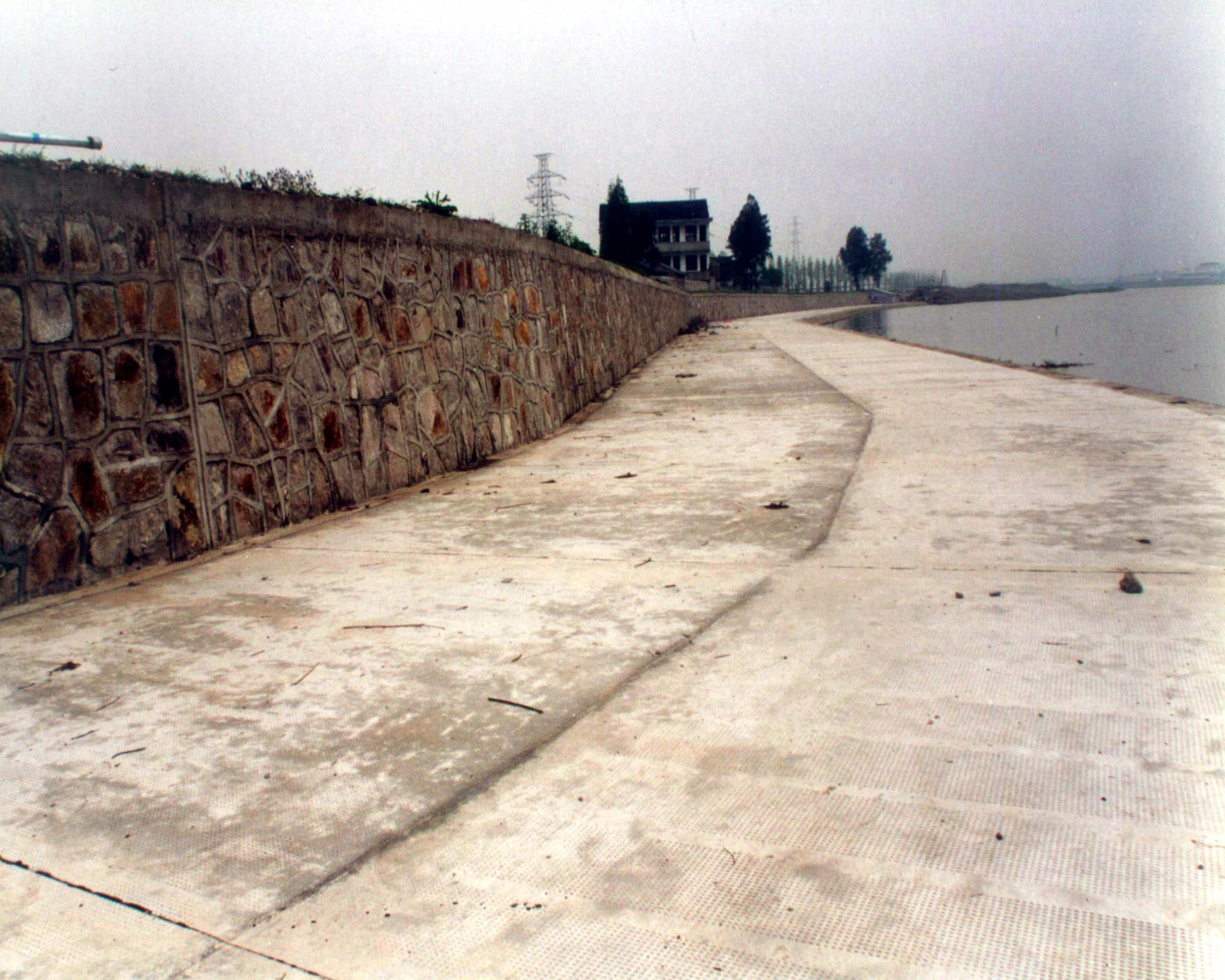
site along the riverside was already embanked with concrete
as part of the local flood control policy.
In meeting the needs of designing this park,
the landscape architect had to provide a concept that
would be accessible to both tourists and locals, while
also providing an alternative flood control and storm
water management solution to be used as a model for
the entire river valley.
The result was the Floating Gardens.
1.The challenges that faced the
landscape architect were:
(1) To convince the local authority to stop channelizing
the river with concrete. Not only is this process ecologically
destructive to the fragile edge conditions of the inter-tidal
zones, but it is also culturally and historically insensitive
to the traditional symbolism and place of the river
with respect to the lives of the local inhabitants.
Additionally, canalization of the river is an expensive
measure that uses up valuable public funds, which could
be allocated to other public projects.
(2) To design an alternative flood control
and storm water management solution, which would be
used as a model for the entire river valley management.
As a part of the speedy urbanization process in China,
almost all rivers in China are finding the same fate;
single-minded flood control projects based on concrete
engineering and damming are canalizing their banks.
Vis-?vis this prevailing trend, this design would become
a model not only for the Yongning River, but also a
visible model for all the river treatment and flood
control projects in China.
(3) To design a functioning park, which
unlike a natural bird sanctuary which can flood and
serve wildlife, must also be accessible and serve tourists
and locals.
2.The design solutions: The Floating
Gardens
The concept of Floating Gardens was developed to meet
the above challenges.
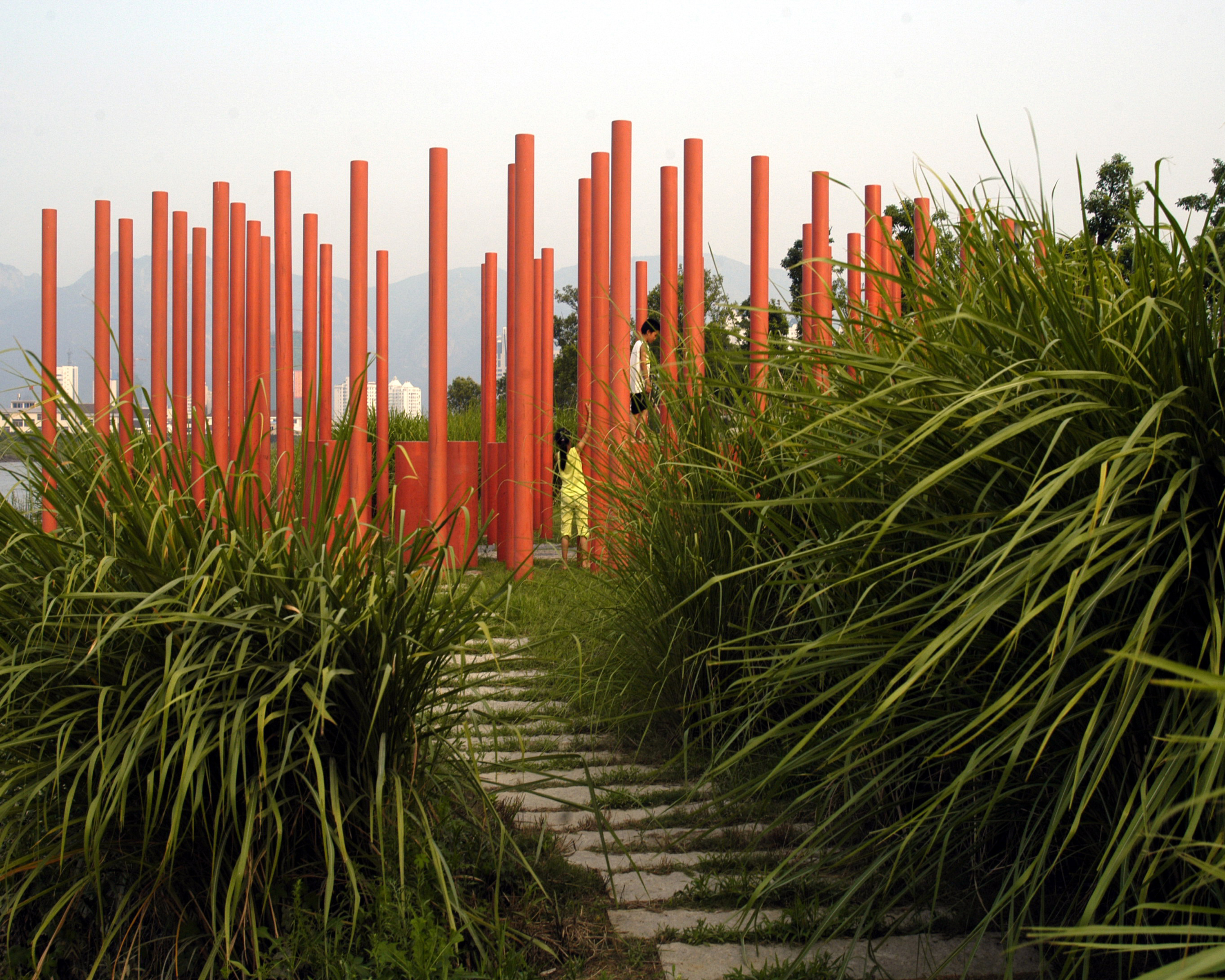
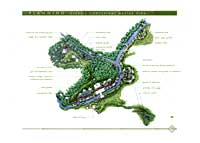
The park is composed of two layers: the
natural matrix overlapped with the human matrix----
the floating gardens. The natural matrix is composed
of wetland and natural vegetation designed for the natural
processes of flooding and native habitats. Above this
natural matrix, float the gardens of humanity composed
of a designed tree matrix, a path network, and a matrix
of story boxes.
The design draws on the following aspects:
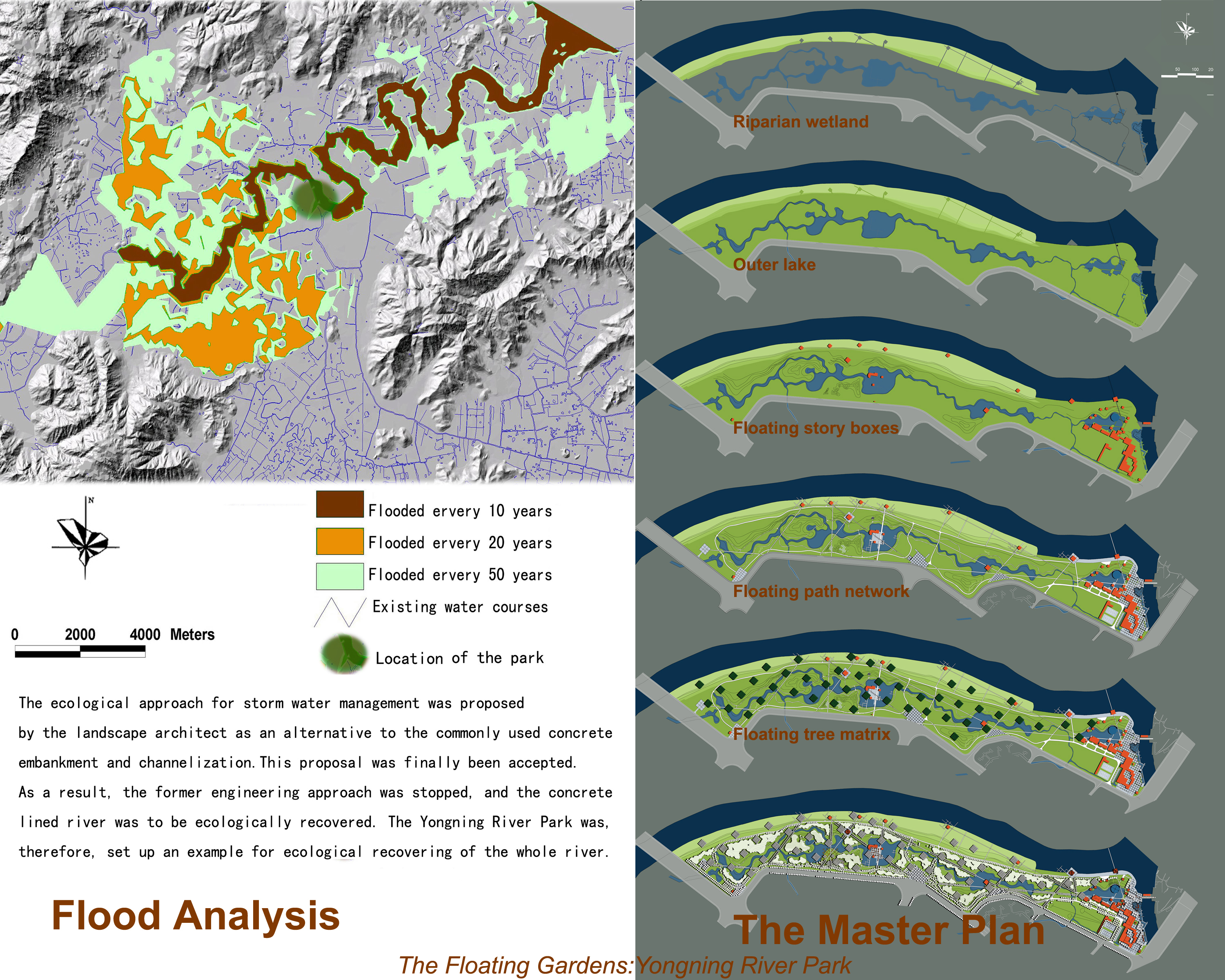
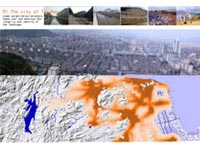
(1) A regional and drainage approach: a storm water
process analysis showed the flood security patterns
at every 5, 20, and 50 years' level. These analyses
become the basis for the site design of the park.
(2) An alternative flood control solution:
a wetland system, based on the regional flood security
pattern analysis enabled flood control and water management
to become an integral part of the park design. The whole
site along the river becomes a multi-functional project
under the leadership of the landscape architect.
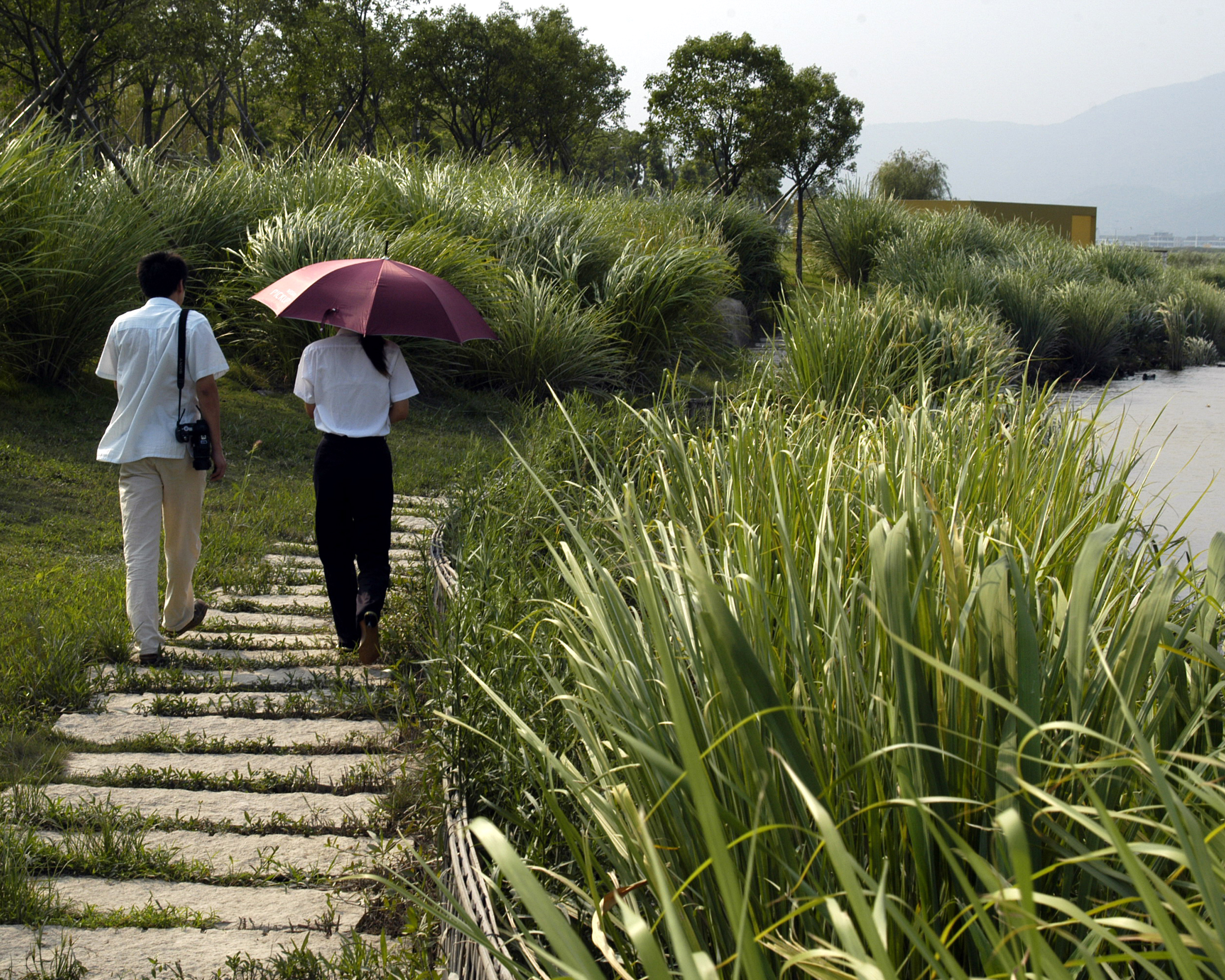
(3) The matrix layer for the natural processes:
composed of a restored riparian wetland along the flood
plain and an outer wetland (lake) outside of the river
bank that runs parallel to the river, the entirety of
the park is covered with native communities. During
the monsoon season, both the riparian wetland and the
outside wetland are flooded. During the dry season,
the outer wetland will still be submerged from both
the retained water and fresh water from the inlet located
in the upper reach of the river. Year round, water is
accessible to park users.
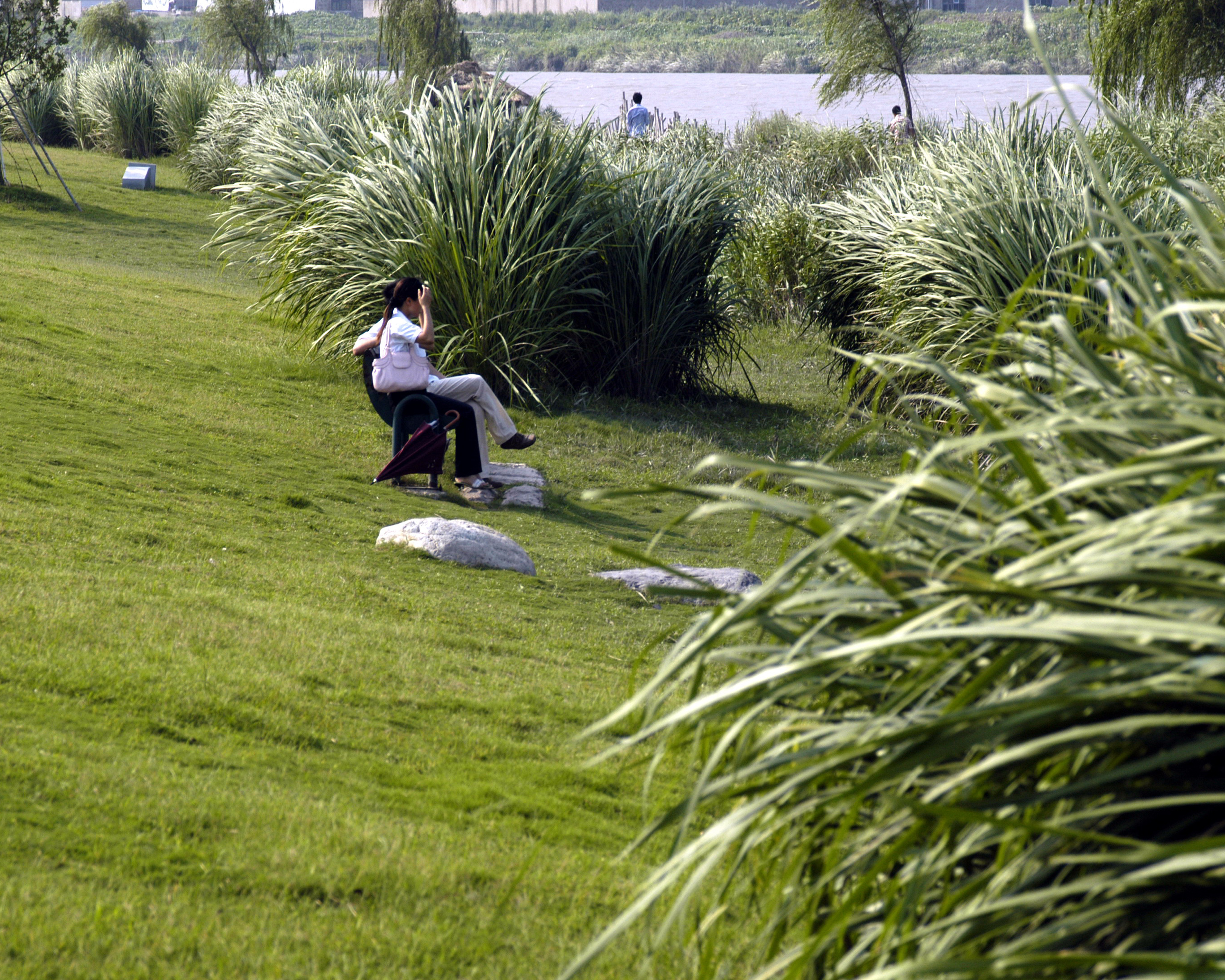
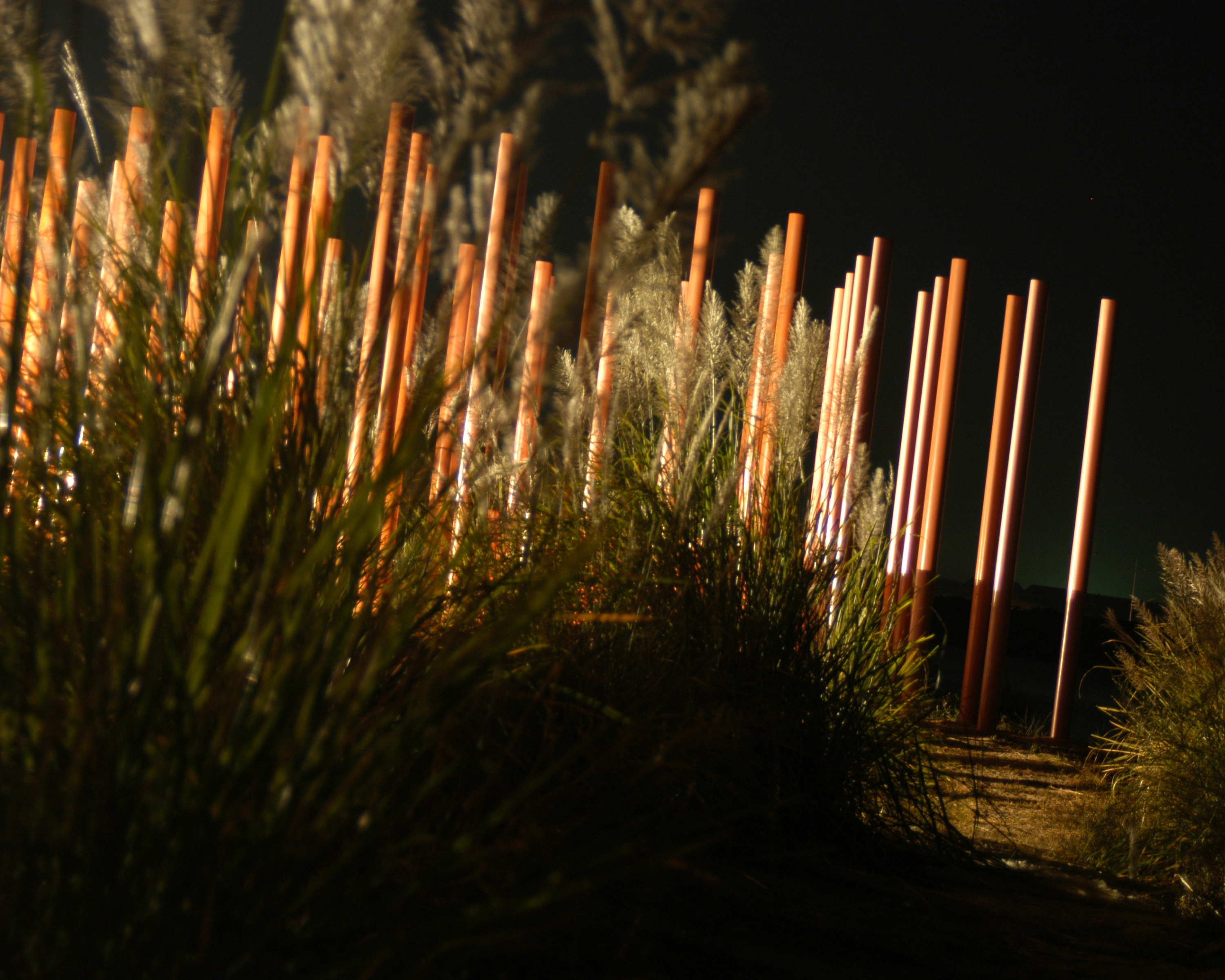
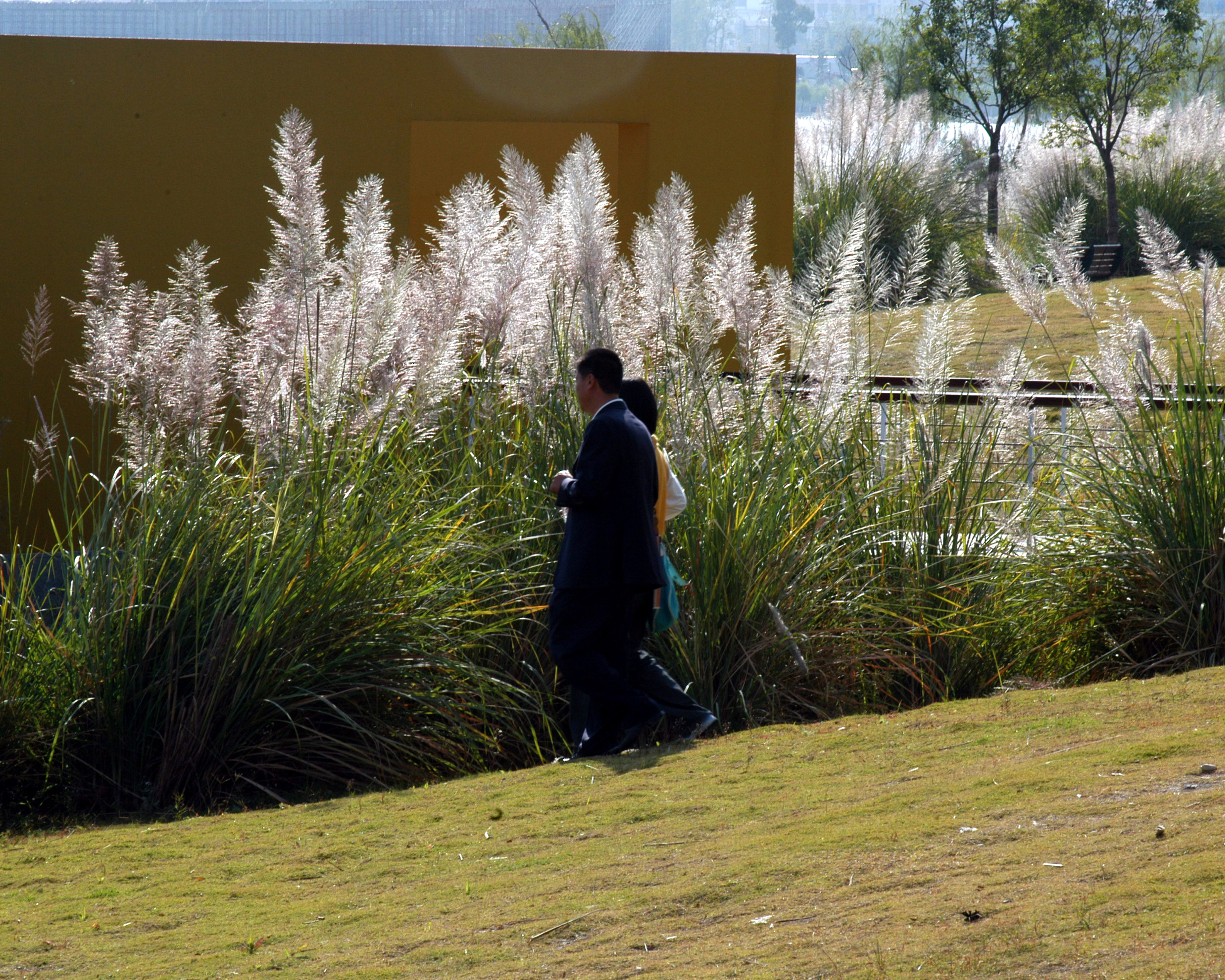
(4) Native wetland plants, trees and bamboos
are massed along the riverbank and throughout the design
not only to ensure successful establishment of the vegetation,
but also to promote continuity of the design with the
surrounding ecosystem.
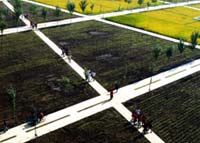
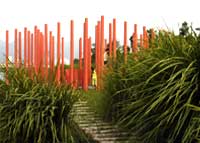
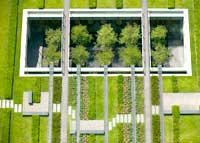
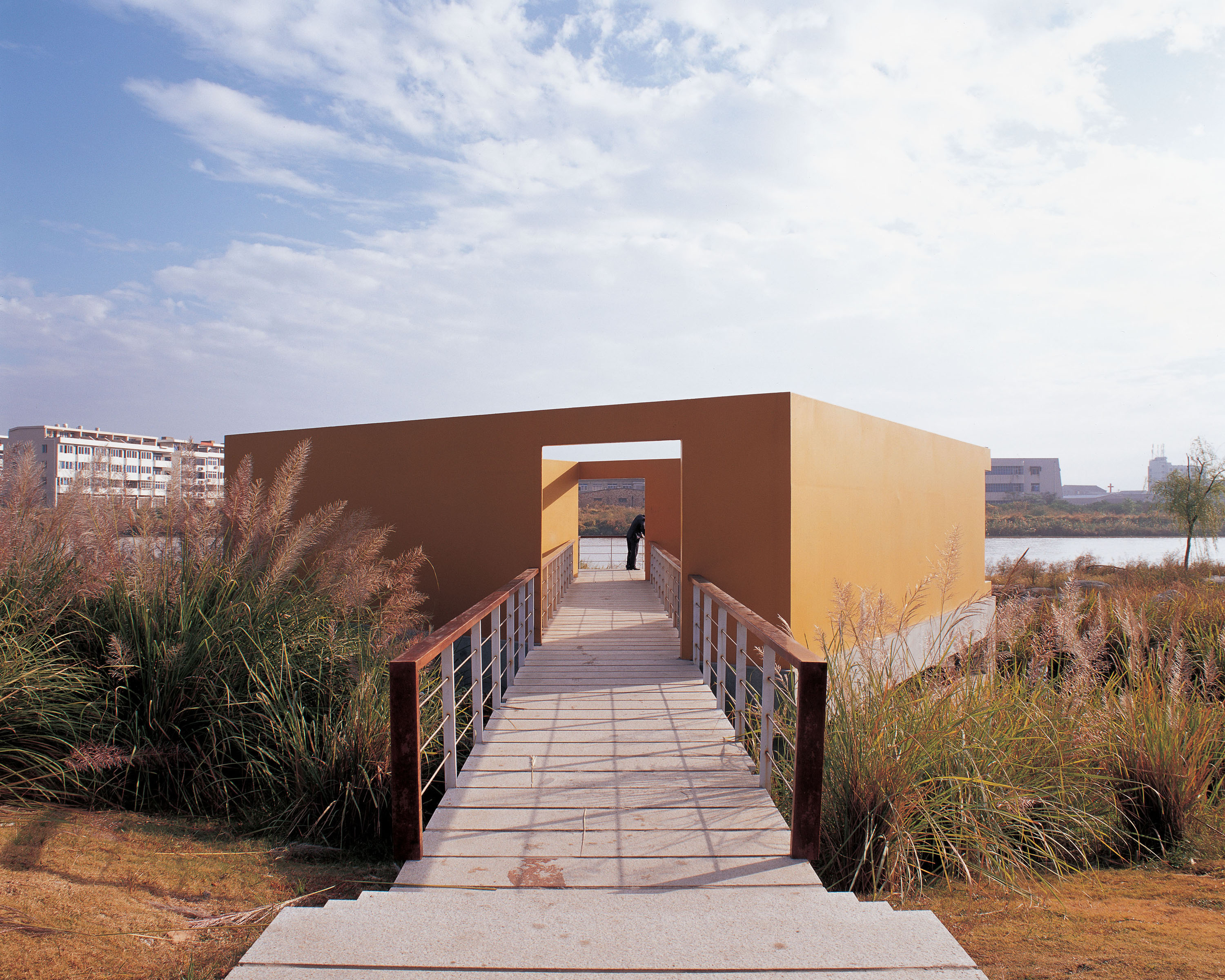
(5) The upper layer for the humanity which
"floats" above the seasonally flooded natural matrix,
is composed of groves of native trees, a network of
paths extends from the urban fabric downwards the park,
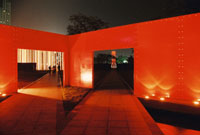
while a matrix of story boxes which allude to the culture
and history of the native land and people punctuate
the landscape at strategically placed points, among
them are a box of rice, a box of fish, a box of hardware
crafts, a box of Taoism, a box of stone, a box of mountain
and water, a box of citrus and a box of martial arts.
The use of boxes is a design approach to frame a human
scale scene for a special theme within a large landscape
background.
3.The significance of the park
This park demonstrates an ecological approach to flood
control and storm water management, while also educating
people about other solutions to flood control beyond
engineering. This park further demonstrates the value
of the native plants and common trees, which were often
neglected.
The Floating Gardens is a park that incorporated
minimum design techniques to create an accessible and
interesting landscape dominated by nature.
|