Peking University Changping Campus Ecological Restoration
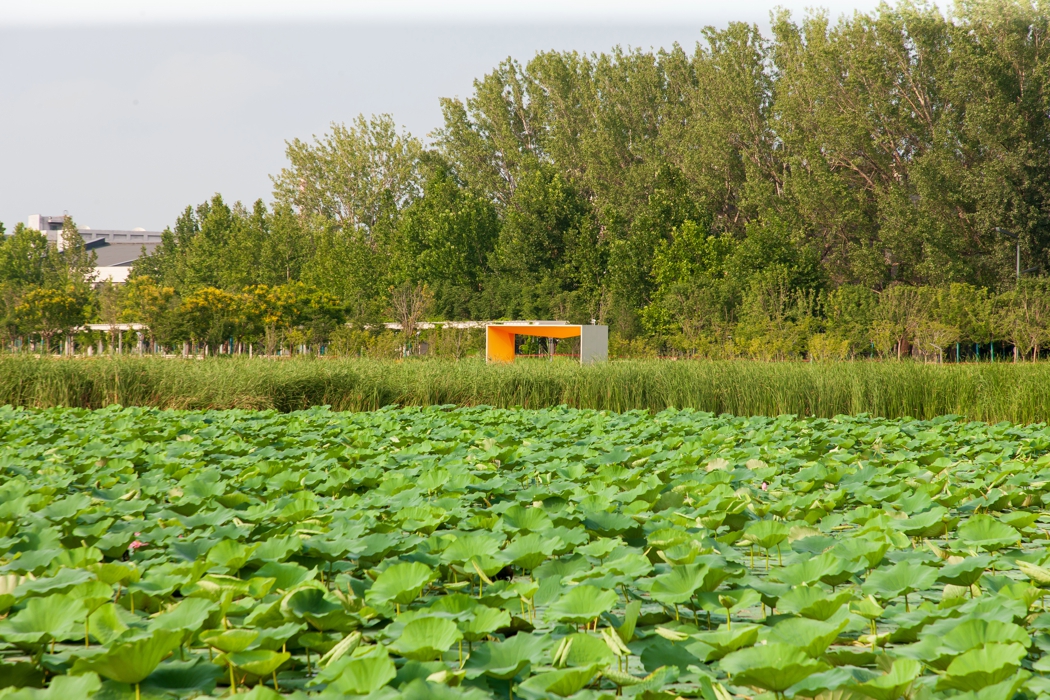
Project Information
- Project Location:
- China Beijing
- Project Scale:
- 25.28 ha
- Design Time:
- August 2021
- Build Time:
- December 2023
- Client:
- Peking University
- Award List:
- 2025 First Batch of Beijing Exemplary Cases for Territorial Ecological Restoration in the New Era; 2025 First Prize, Ecological Engineering Application Category, 4th National Eco-Concrete Innovation Design and Application Competition
Project Profile
1. Project Statement
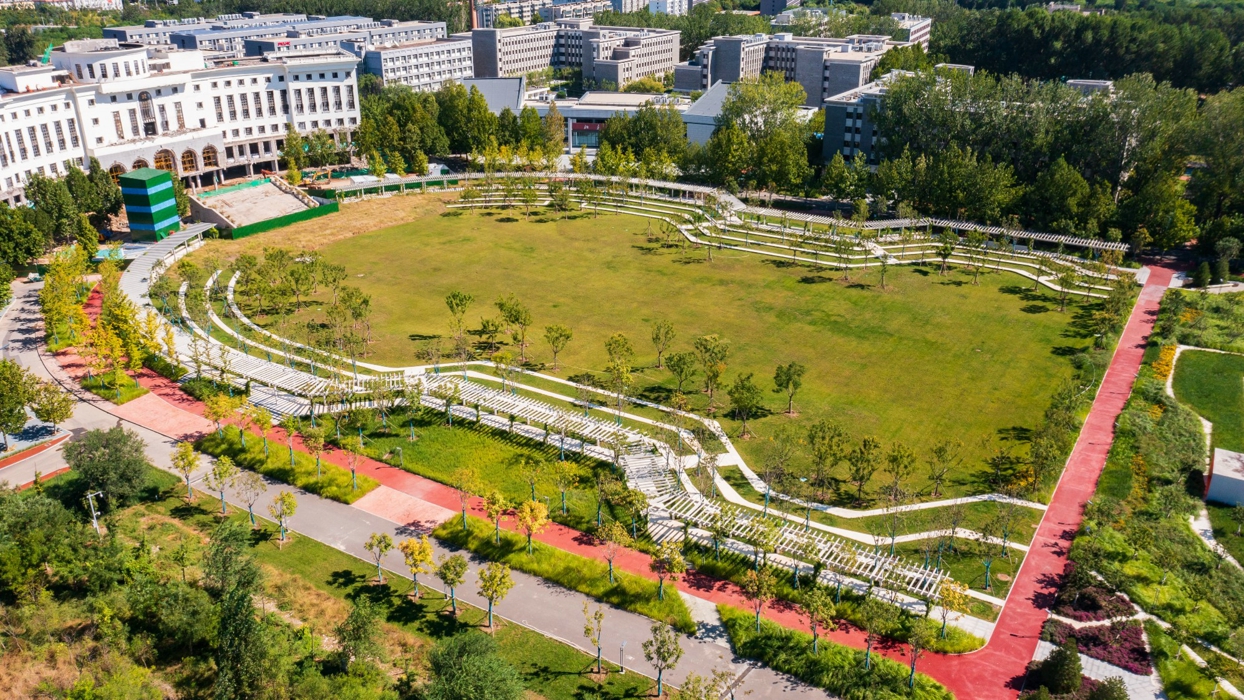
The Beixiaoying West River (Peking University Changping Campus Section) is located in Machikou Town, Changping District, Beijing. The project extends 1.1 kilometers with a restoration area of 25.28 hectares.
The project serves as an innovative demonstration of Beijing’s efforts to advance ecological civilization and develop both Garden City and Sponge City initiatives. It also represents an important undertaking by Changping District to promote integrated water management and build beautiful urban rivers and lakes. To support China’s national strategy for emerging engineering education (“New Engineering”) and Beijing’s ambition to become a globally influential center of scientific and technological innovation, Peking University has established its Changping New Campus as a major hub for interdisciplinary engineering education and research. Beixiaoying West River functions as the campus’s central shared landscape and ecological corridor.
2. Objectives and Challenges
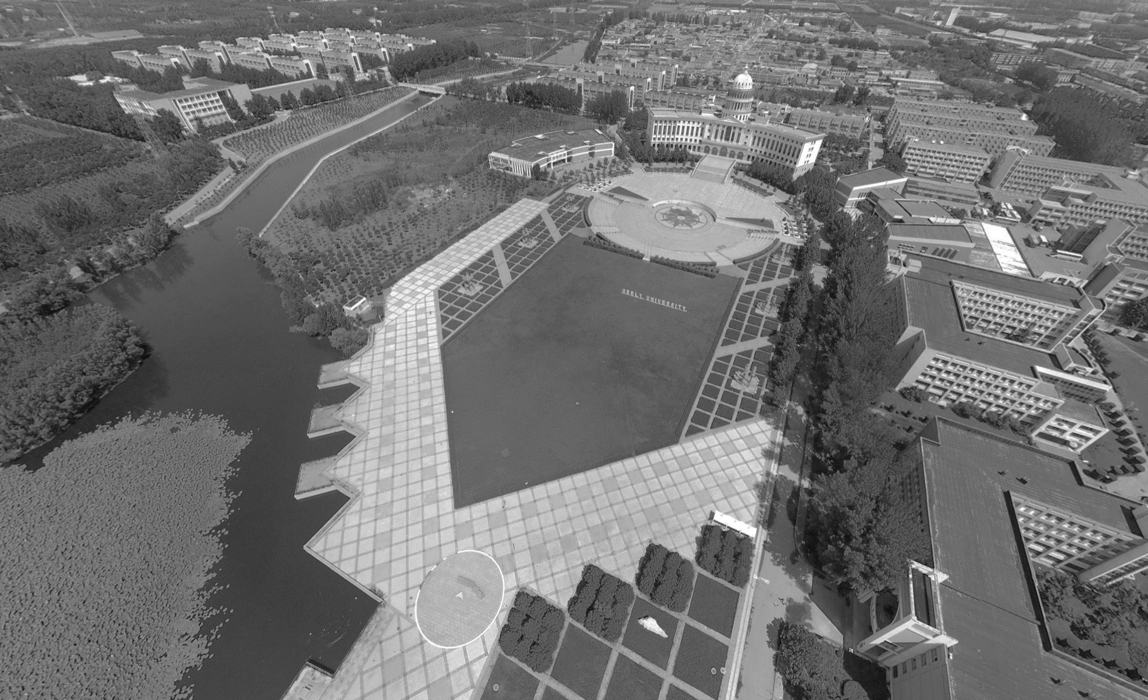
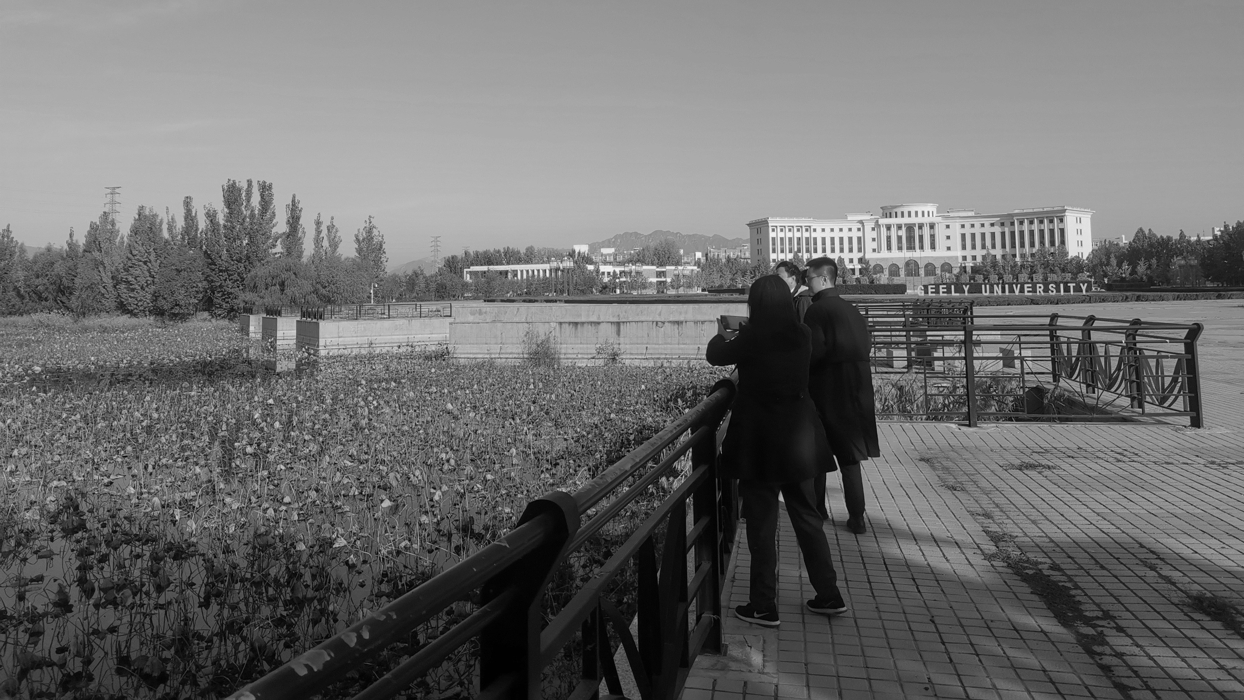
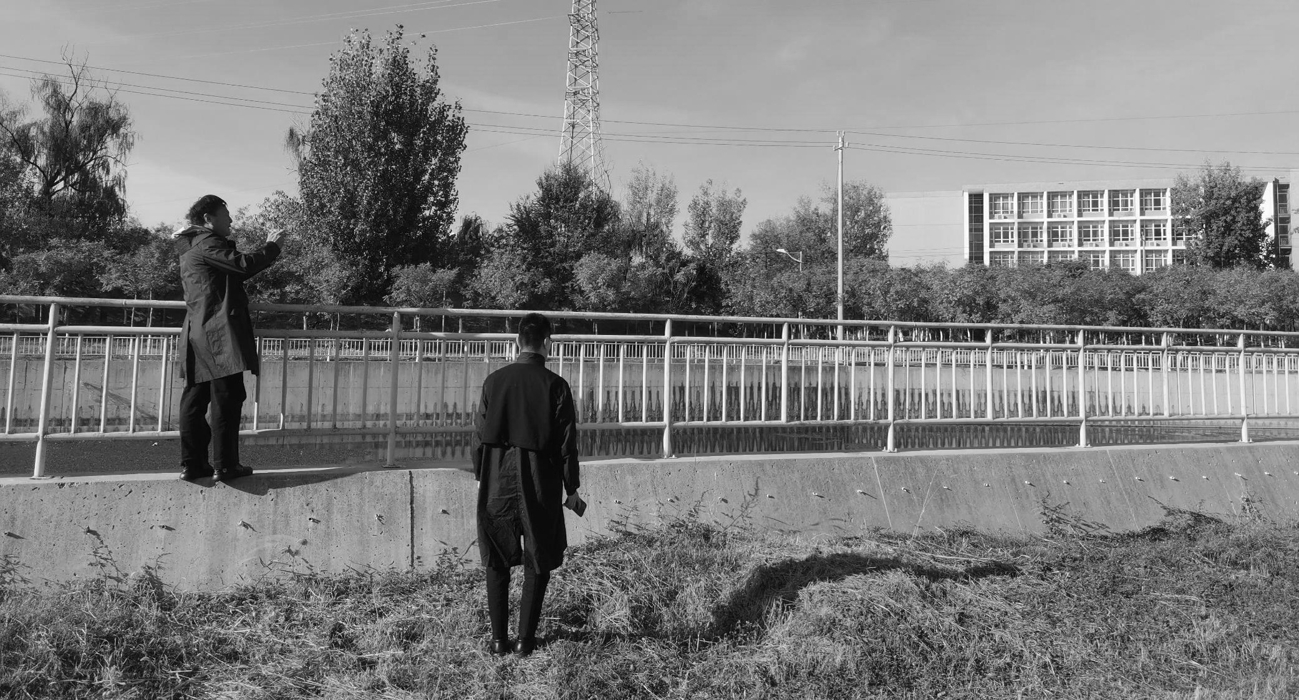
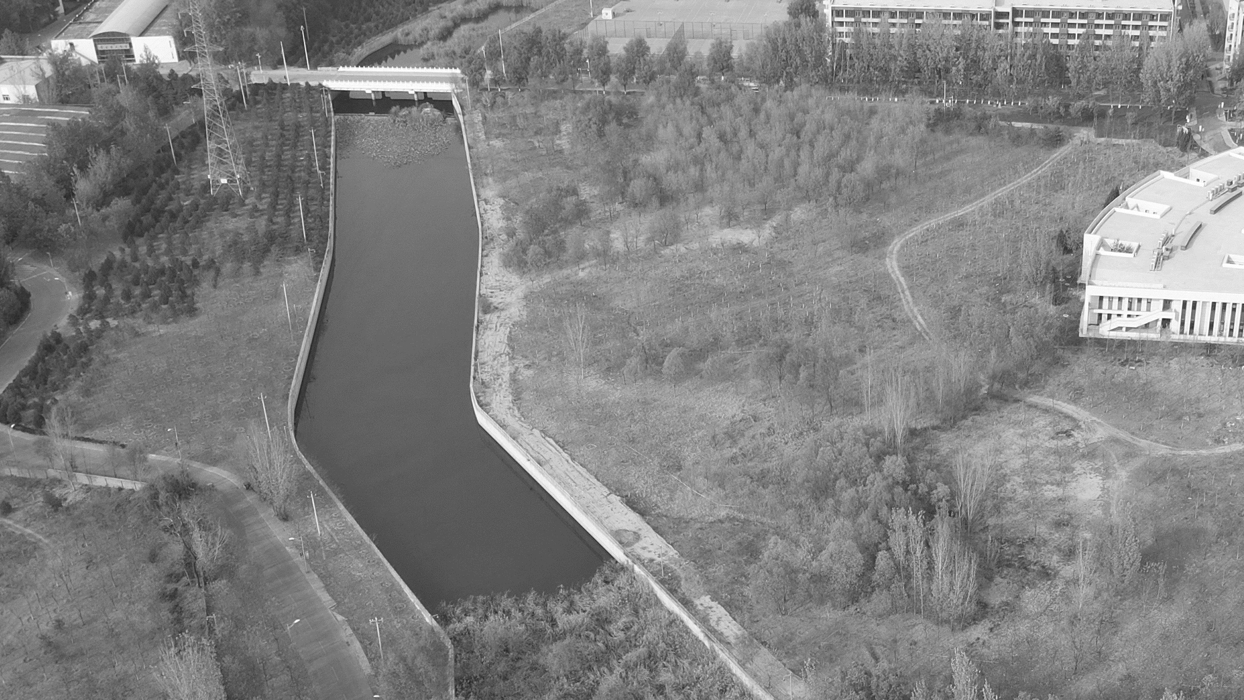
The project area lies within one of Beijing’s important groundwater recharge zones and is also highly vulnerable to flooding, making its ecological functions particularly significant. Historically, the river was a naturally meandering stream with extensive floodplains. However, urban expansion and campus development gradually transformed it into a straightened, uniformly engineered drainage channel, resulting in the loss of essential ecological functions and ecosystem services.
Due to historical constraints, the river section faced dual challenges: increasing flood risks and insufficient flood conveyance capacity.
The project aimed to restore the river ecosystem through nature-based solutions, creating:
- A green ecological core supporting regional biodiversity;
- A safe and resilient campus environment for Peking University’s long-term development;
- A vibrant waterfront that fosters interaction among students and faculty;
- A green landmark that enhances the identity of the surrounding district.
The project serves as a practical demonstration of Beijing’s vision for an integrated blue-green urban landscape where water and city coexist harmoniously.
3. Design Strategies
(1) Integrated Blue-Green Planning and Unified Design
The project established an innovative district-university co-governance mechanism. Through coordination among multiple stakeholders, including the Parks and Forestry Bureau and the Water Authority, parkland and roadway corridors extending 30–40 meters on both sides of the river were incorporated into a unified restoration framework. The project was also coordinated with the renovation of the campus central plaza.
By breaking down administrative boundaries among landscape, water management, and campus management authorities, the project achieved truly integrated planning and design, balancing multiple functions and resources within a single framework.
(2) System-Based Restoration and Sponge Resilience
Based on the planning unit scale, the project adopted an integrated land-water restoration approach and established a complete sponge system encompassing source control (buildings), process management (green spaces), and terminal storage and conveyance (river channels).
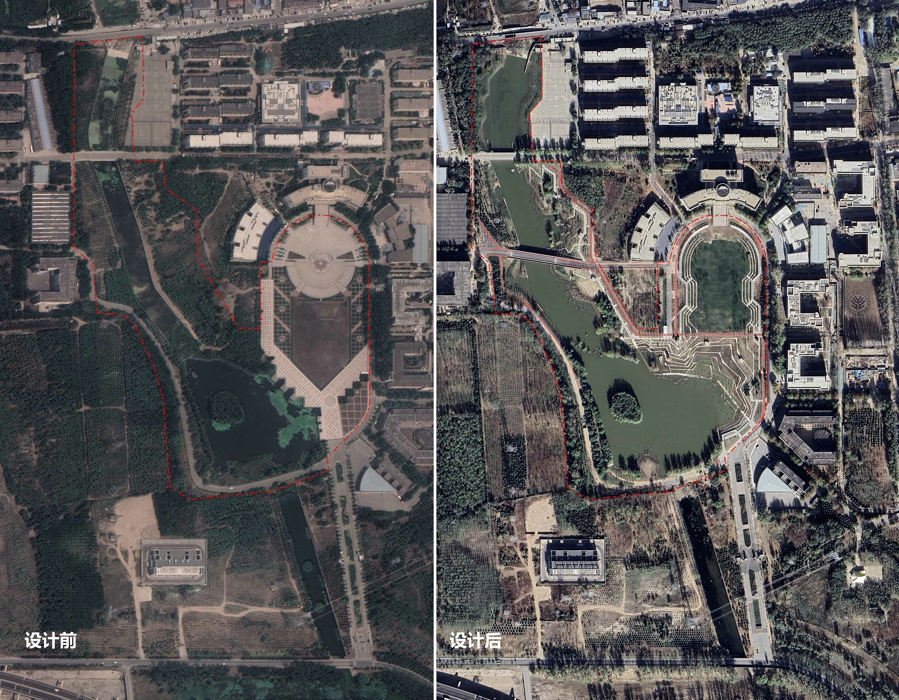
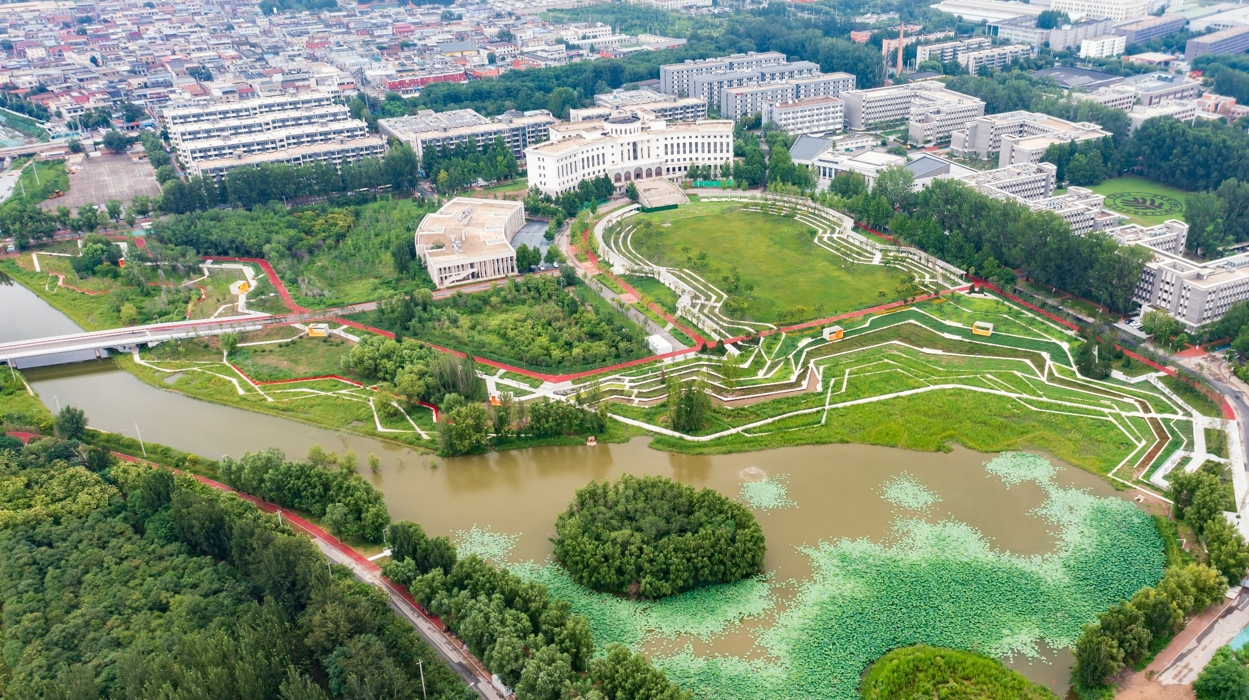
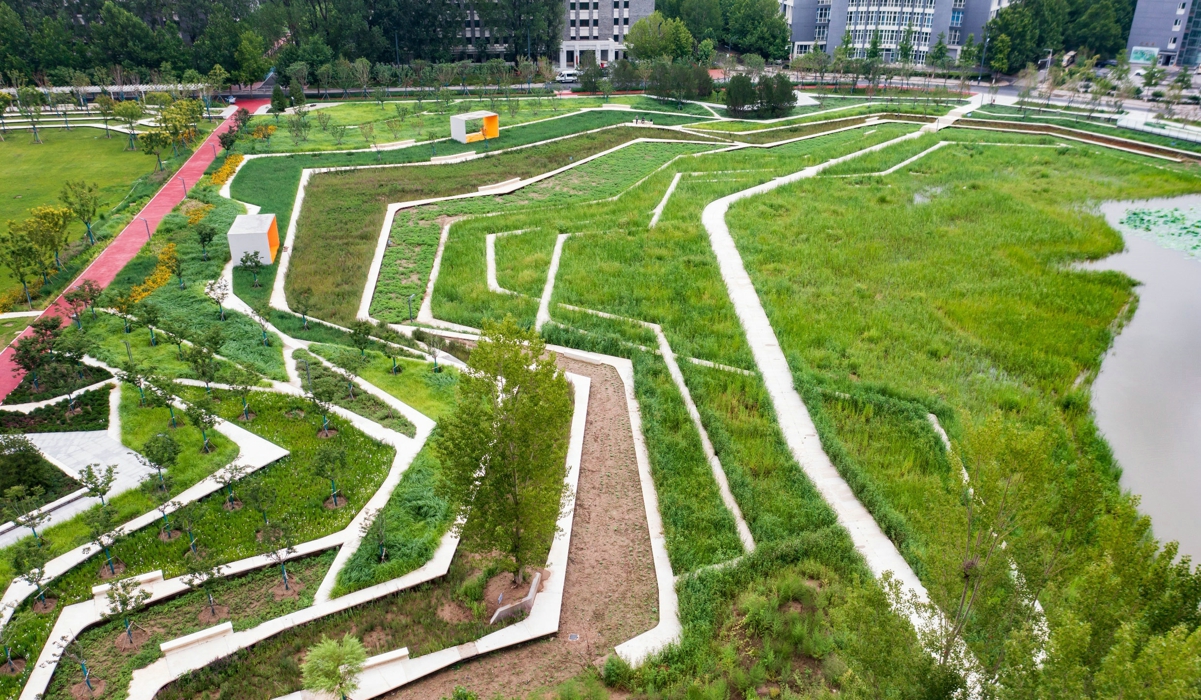
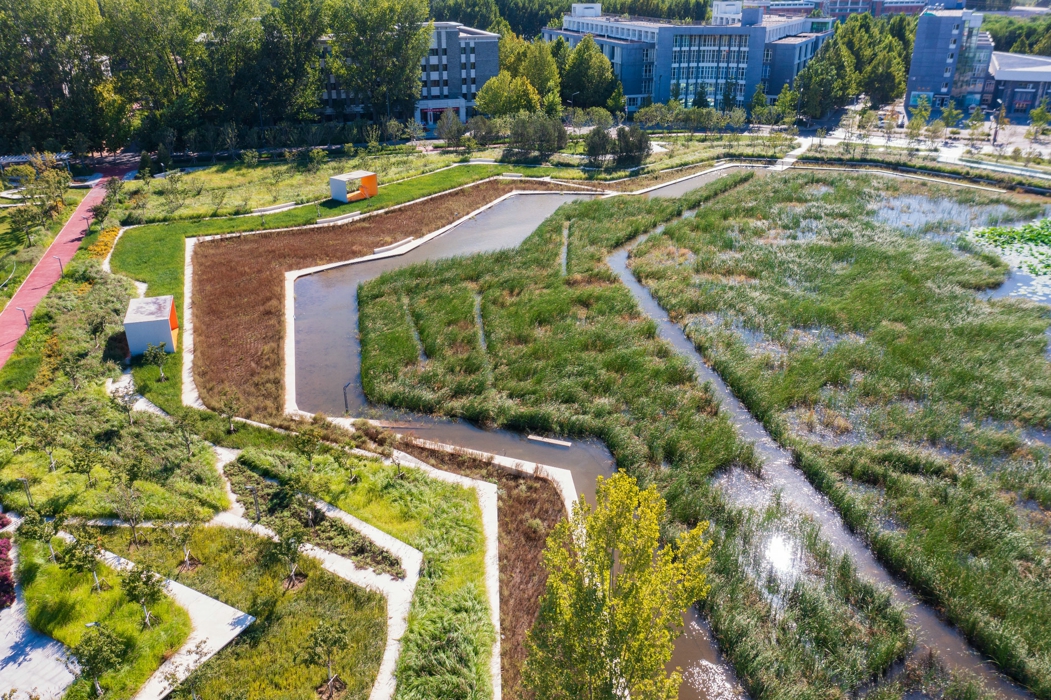
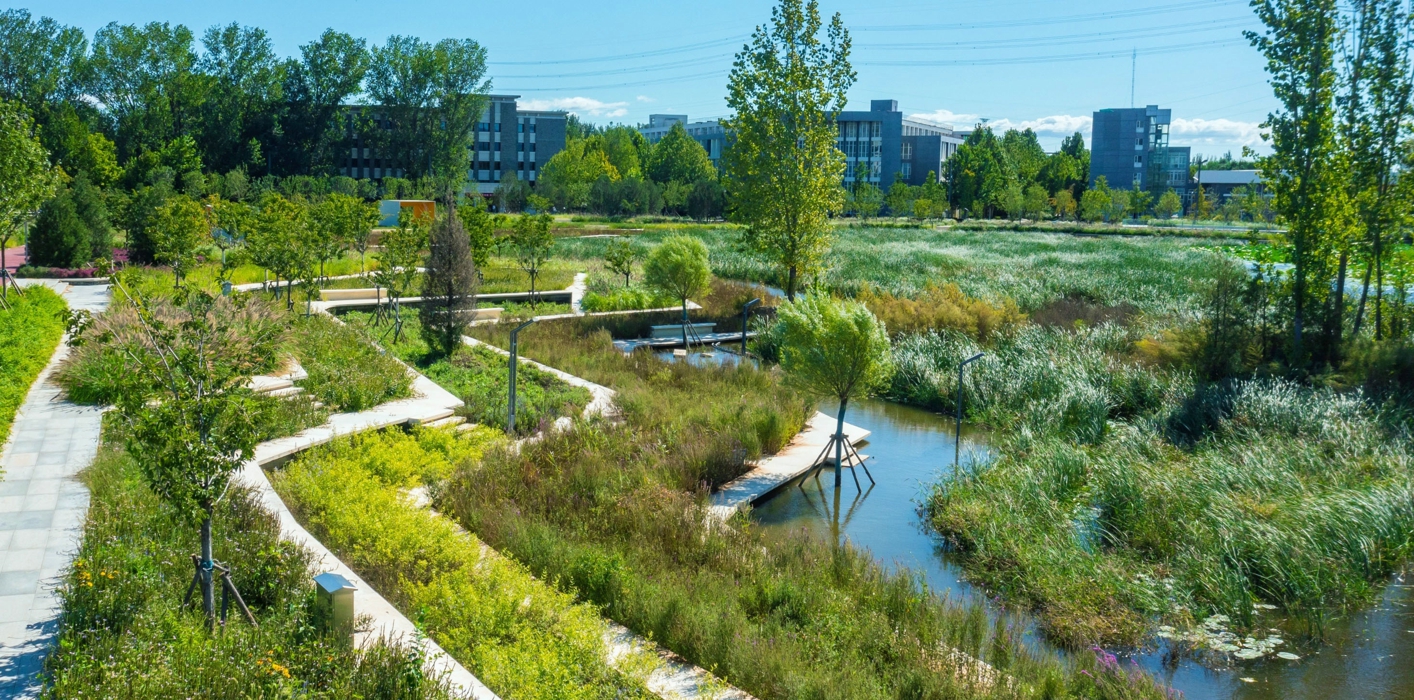
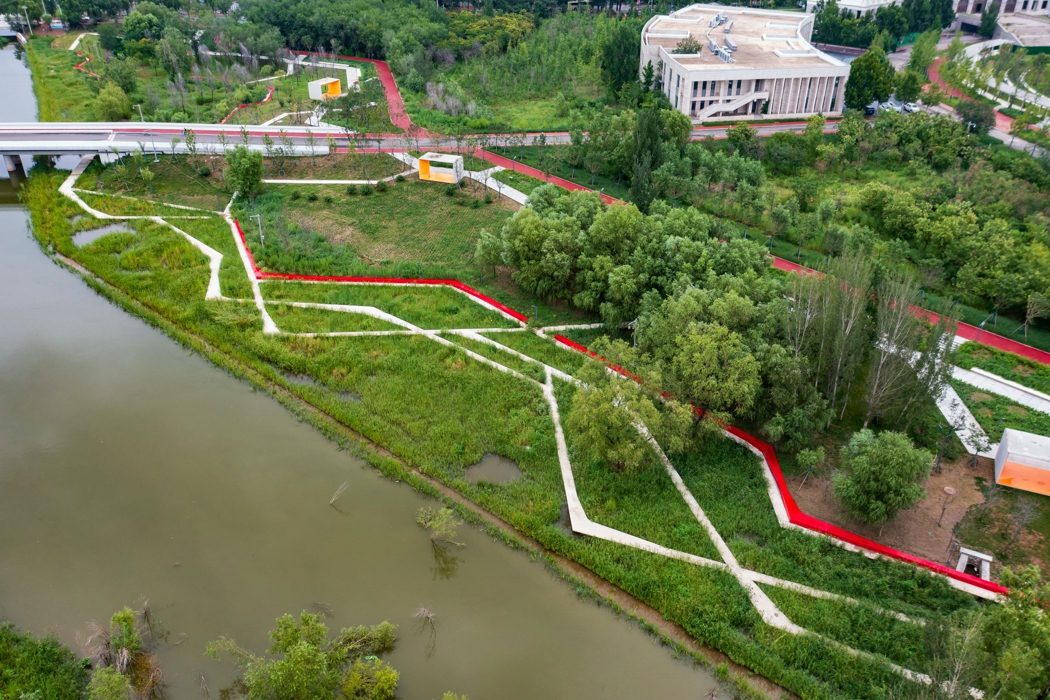
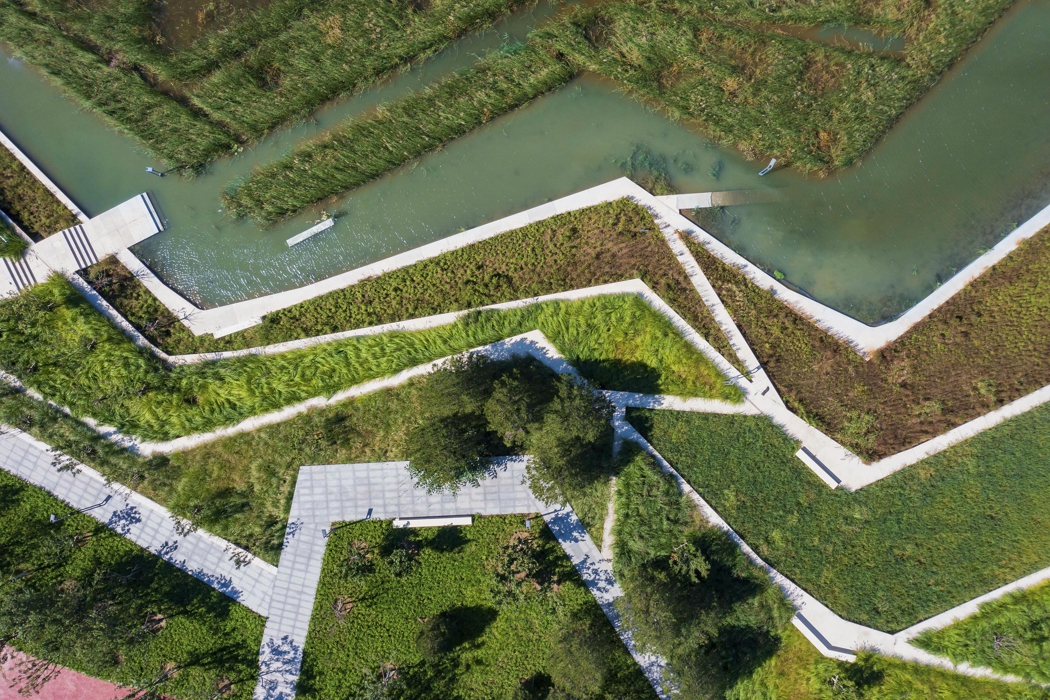
The design maximized space for water by replacing existing steep concrete embankments with gentle natural slopes and terraced landforms. Shallow wetlands and floodplain habitats were expanded wherever site conditions allowed.
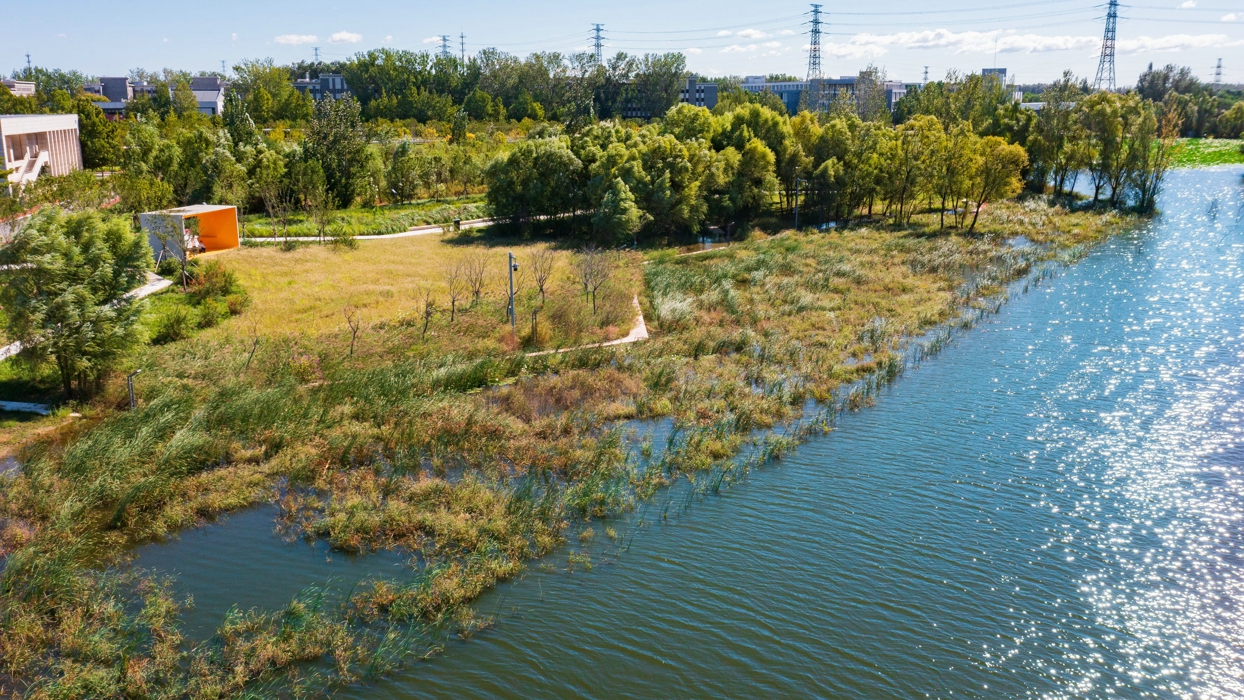
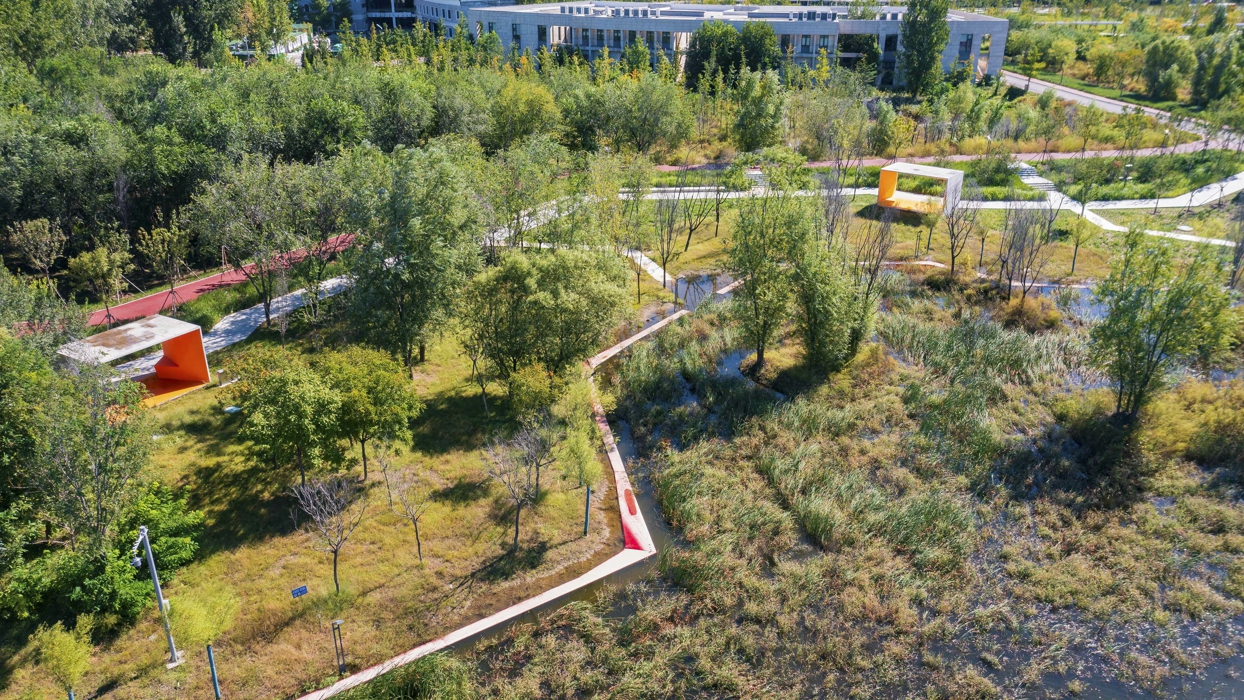
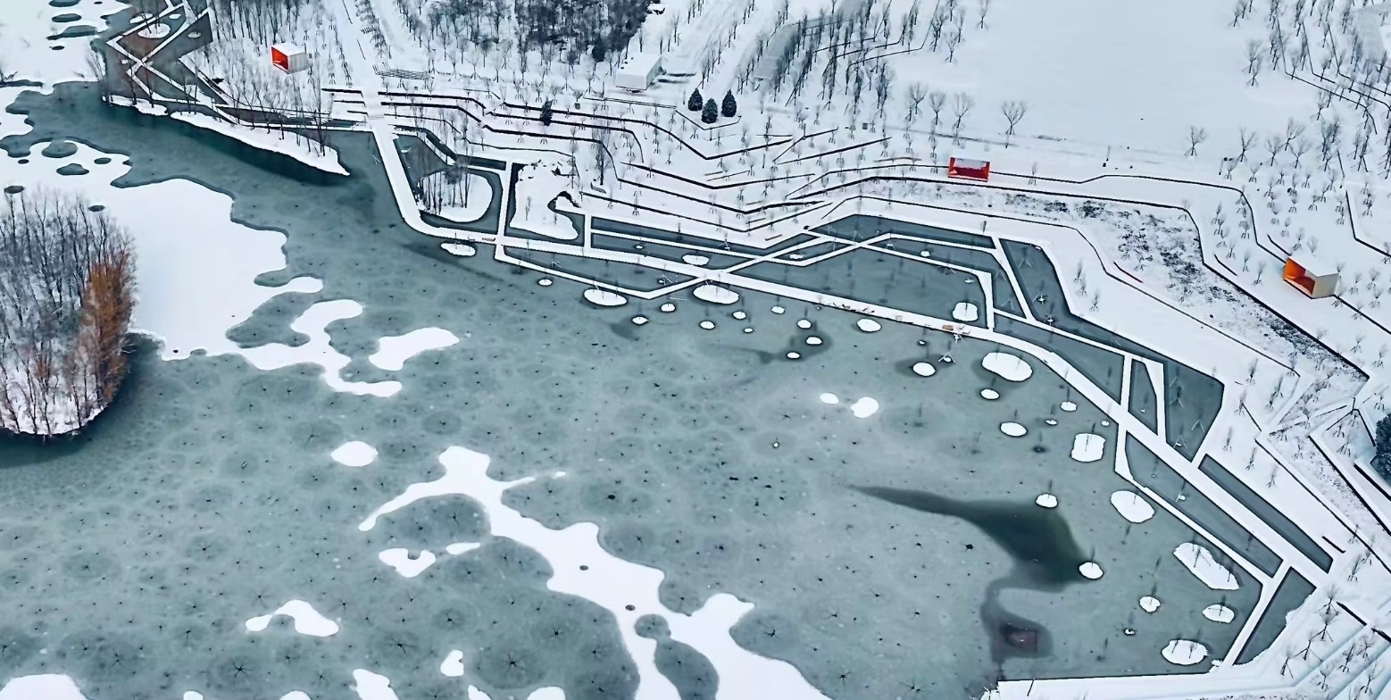
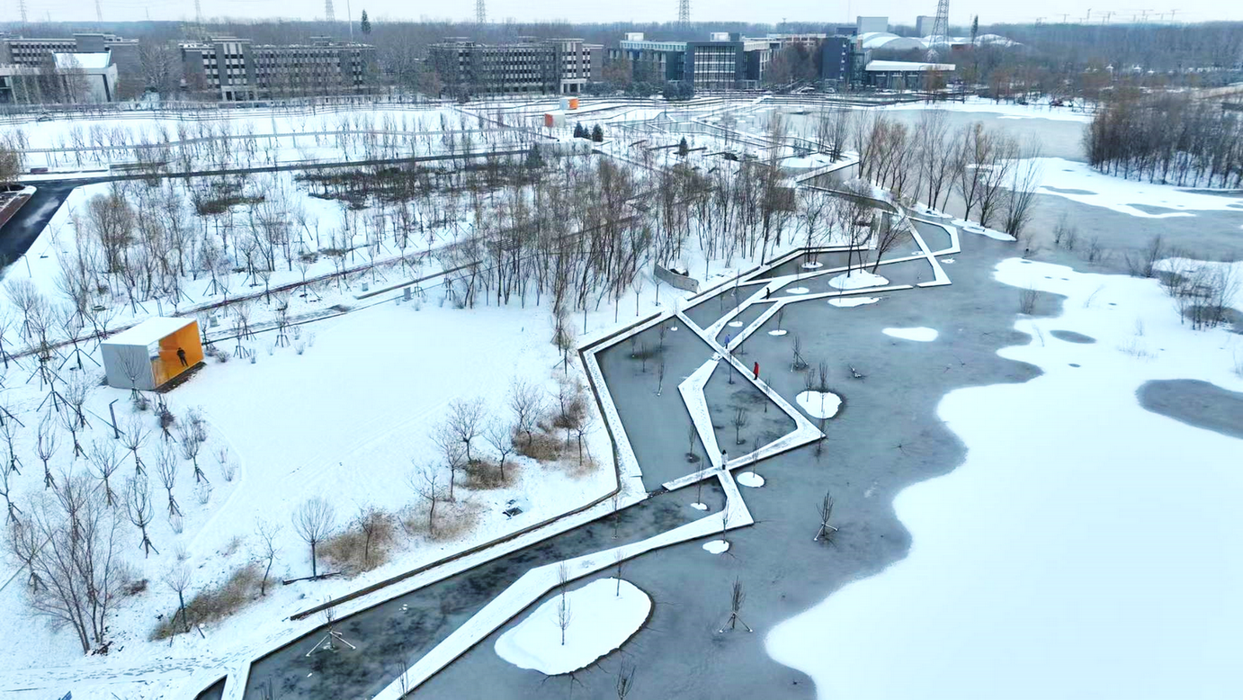
The newly restored shoreline features a meandering form with multiple bays, inlets, wetlands, and riparian habitats. By moving beyond the river’s former single flood-control function, the design simultaneously enlarged flood conveyance capacity, increased ecological carrying capacity, and enhanced overall resilience, creating a multifunctional river corridor.
(3) Turning Waste into Resources
The project employed innovative design solutions to reduce construction costs while improving environmental performance.
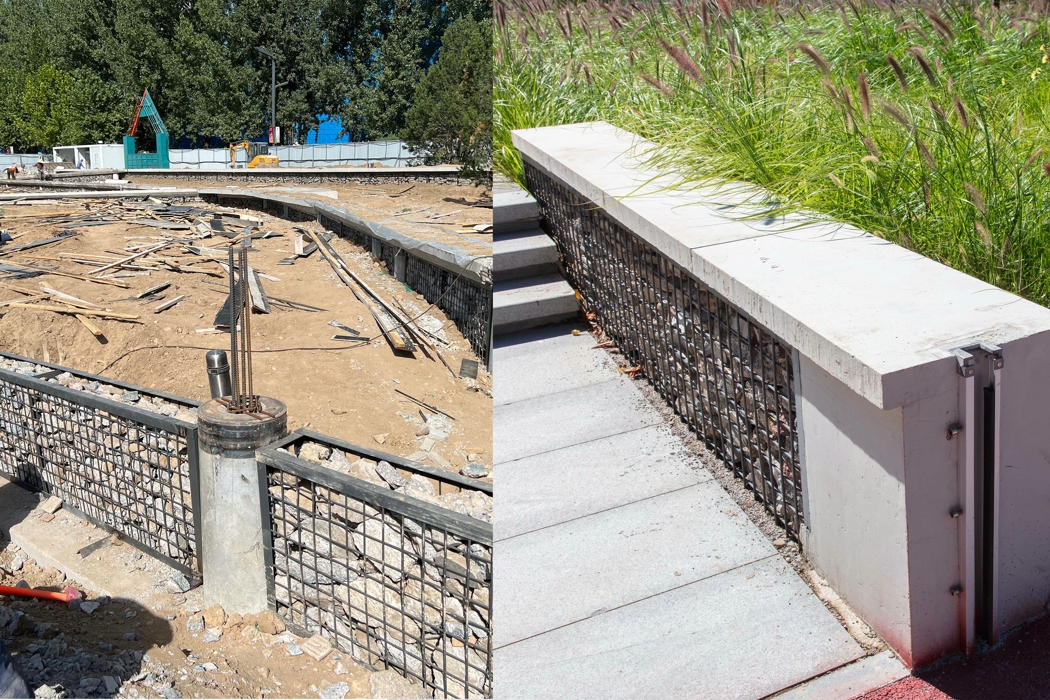
Construction debris generated on-site was prioritized for reuse. Demolished concrete materials were repurposed as infill for gabion structures, transforming previously impervious concrete infrastructure into breathable sponge embankments.
Prefabricated modular construction systems were also adopted to shorten construction time and reduce costs while ensuring high-quality implementation. The modular approach allows future reuse and replication, increasing the project's scalability and applicability elsewhere.
As a result, the project achieved a remarkably low construction investment of approximately RMB 308 per square meter.
(4) Shared Vitality and Human-Water Harmony
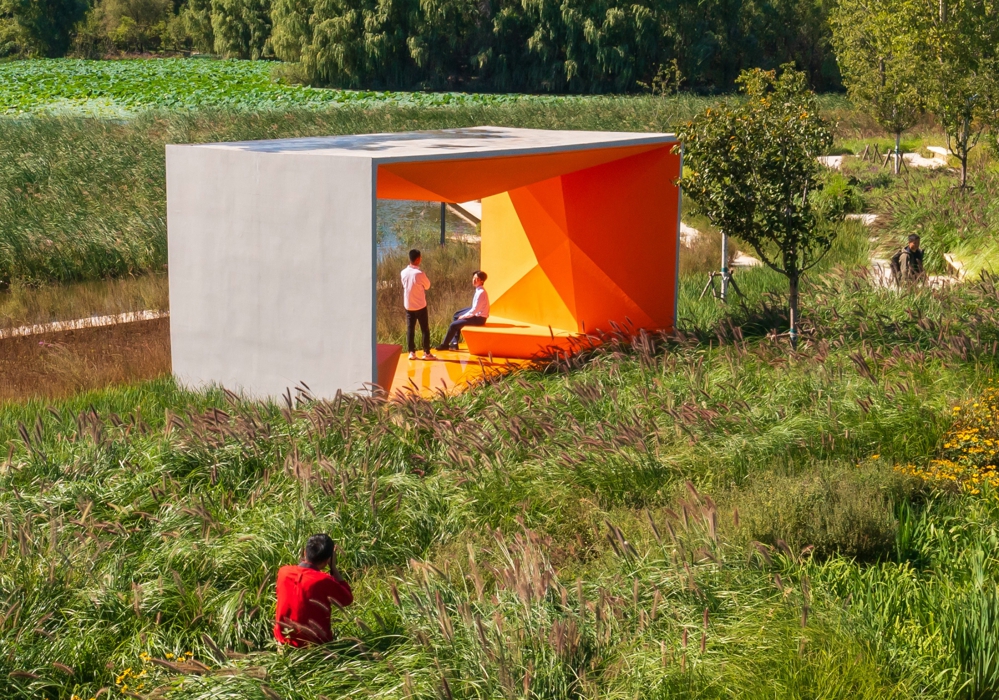
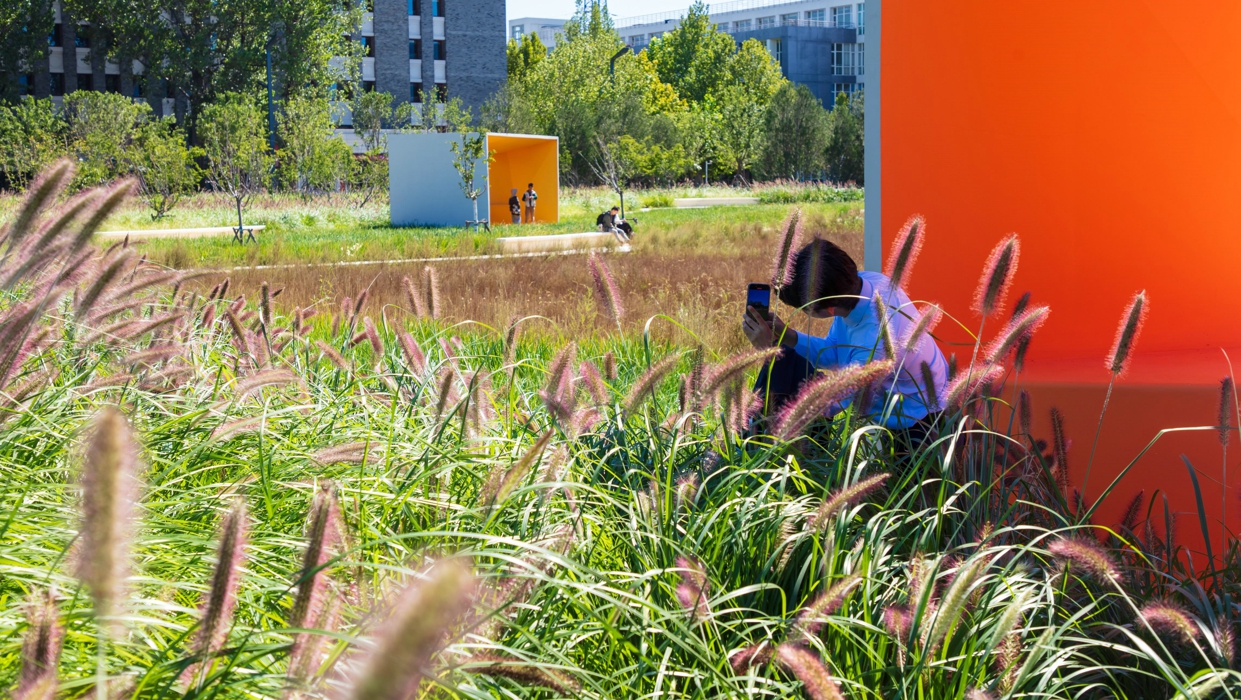
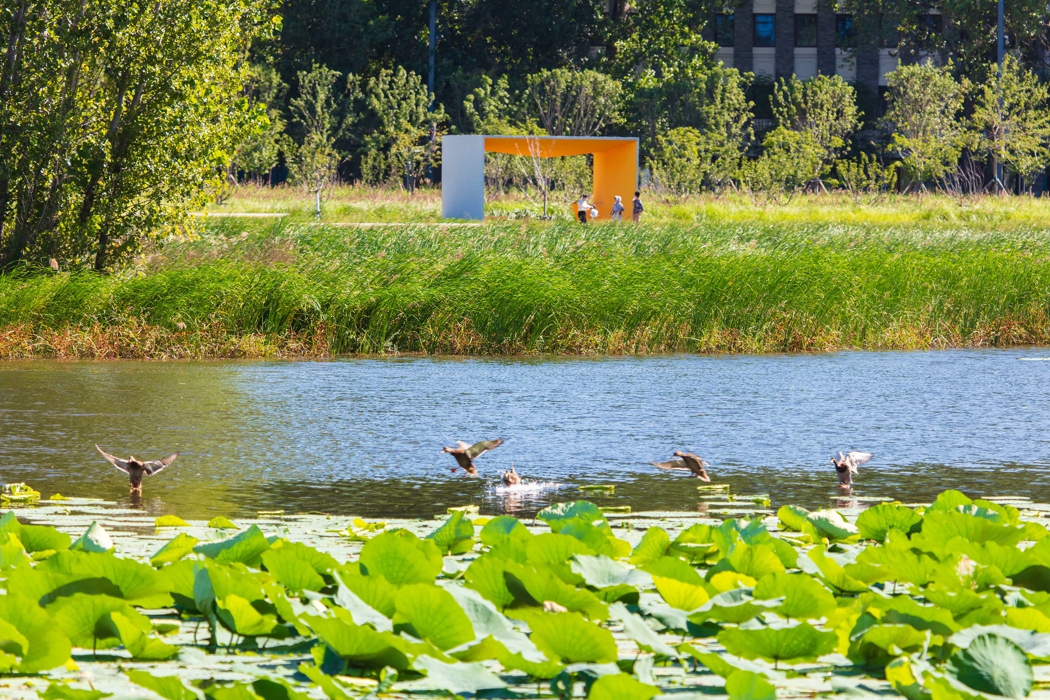
Guided by the principle that “a healthy ecological environment is the most universally beneficial public welfare,” the project transformed formerly inaccessible waterfront areas into vibrant public spaces where people can engage directly with water and nature.
Building upon the restored ecological landscape, the design introduced a diverse waterfront recreation system, including:
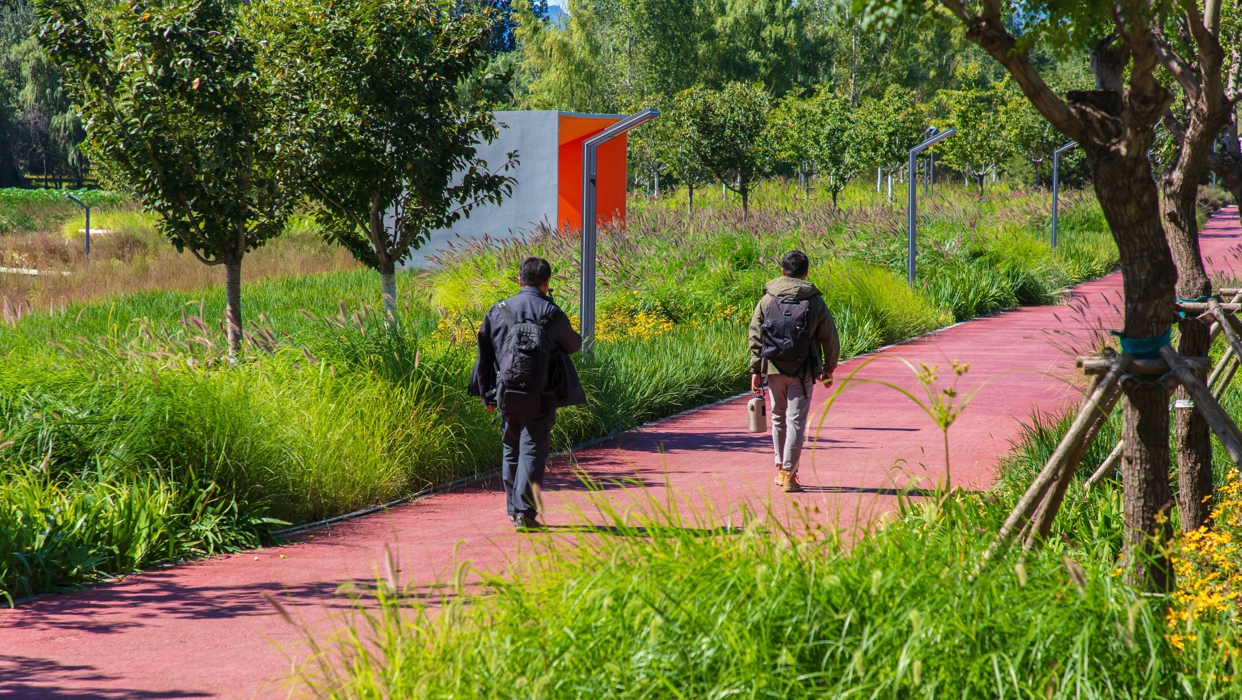
A lakeside running trail integrated with flood-control embankments;
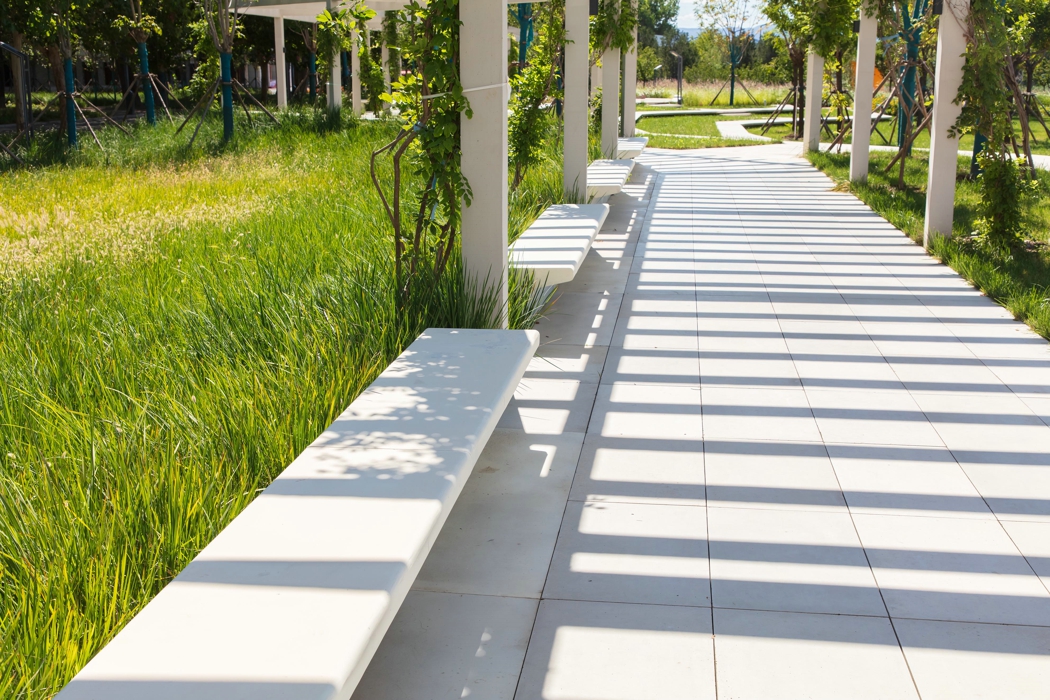
Terraced reading promenades facing the water;
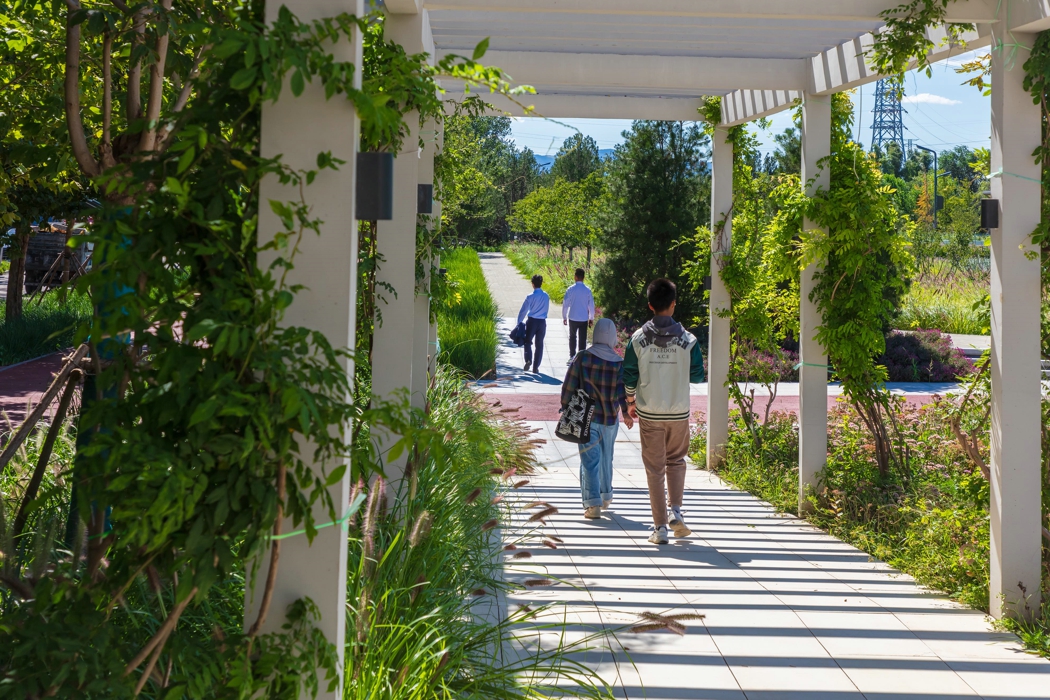
Elevated boardwalks winding through woodlands and wetland vegetation.
Together, these elements create a layered and immersive slow-mobility network along the waterfront.
The resulting ecological landscape not only encourages interdisciplinary interaction and collaboration among students and researchers but also provides an inspiring environment for creativity and innovation. As a key component of Peking University’s New Engineering campus, the project contributes both ecological resilience and human-centered value to the university’s mission of serving national strategic development.
4. Conclusion
The ecological restoration of Beixiaoying West River demonstrates an innovative district-university partnership model. Supported by the Changping District Government and coordinated among multiple land management agencies, the project was implemented under the leadership of Peking University, successfully overcoming administrative boundaries and achieving integrated blue-green planning.
From an engineering perspective, the project follows Sponge City principles and nature-based restoration strategies through systematic ecological interventions. By incorporating recycled construction materials, modular construction techniques, and integrated watershed-scale planning, the project significantly reduced implementation costs while promoting long-term ecological sustainability.
As a result, the project establishes a new benchmark for ecological river restoration and sustainable water management in Beijing and provides a valuable model for future urban river rehabilitation projects throughout China.
